
From Stage to Screen: a WICKED Movie Review
- mel overton
.png/v1/fill/w_320,h_320/file.jpg)
- Jan 29, 2025
- 4 min read
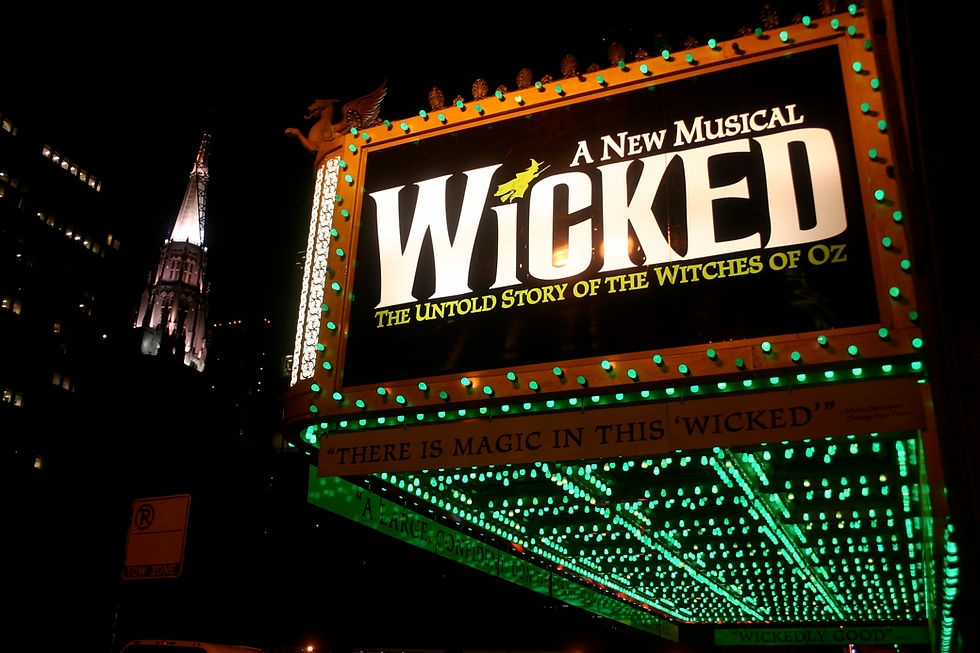
Feature image by Our Movie Guide, CC BY 3.0 <https://creativecommons.org/licenses/by/3.0>, via Wikimedia Commons
Warning: does include spoilers for Wicked: Part 1.
Wicked: Part 1 is a long-awaited cinematic adaptation of the beloved Broadway musical Wicked – a musical focusing on Elphaba and Glinda’s early years, focusing on their shift from unlikely friends to the iconic foes we see in The Wizard of OZ. Directed by Jon M. Chu, this adaptation has been split into two parts, allowing for deeper storytelling and character development.
Part 1 is filled with breathtaking visuals, emotional performances and storytelling, and a fresh take on the already beloved narrative.
Lighting and Storytelling
Lighting can be a very powerful tool in order to enhance storytelling, and you can see just that within Wicked: Part 1. The use of lighting can be seen heightening key emotional moments throughout this adaptation.
A standout example of this was during the song “The Wizard and I” where Elphaba’s iconic green skin is very subtly “degreenified” through the use of contrasting lighting as she imagines the Wizard offering her acceptance and transformation. This effect visually shows her suppressed hope and longing for a better life.
During “Defying Gravity”, the interaction of shadows and spotlighting highlights Elphaba’s transformation from the vulnerable outcast to the empowered figure that we see at the end.
While Glinda’s scenes are bathed in shiny, golden hues – serving to emphasize her sparking and bubbly persona -, darker greens and blues dominate Elphaba’s scenes, reflecting on the isolation and internal struggles that the misunderstood witch experiences.
The lighting throughout this film evolves alongside the character’s emotional journeys, showing how the film goes from the only major problem being that they must share a room, to Elphaba having to escape before she gets caught for defying the wizard. These discreet lighting choices add an additional layer of depth to the film, turning these already iconic moments into vivid cinematic standouts.
Performances
Cynthia Erivo delivers a nuanced and emotionally charged take on the green-skinned outcast, Elphaba. Her voice shines through in iconic numbers such as “Defying Gravity”, which serves as a breathtaking climax of the character's emotional arc, along with her own vocal mastery.
Erivo portrays Elphaba’s vulnerability and strength with such depth that the audience can truly connect and resonate with her struggles. She has redefined the role, making Elphaba her own, while still honouring the legacies of those who played the character before.
Ariana Grande magically balances Glinda’s bubbly charm, with moments of insecurity and self-reflection, showing us an endearing depth beyond her surface-level persona.
Grande’s comedic timing is immaculate, notably in “Popular”, where her playful energy shines. While primarily known as a global pop superstar, Grande’s vocal and acting skills have proven that she is more than capable of walking in the shoes of this iconic role.
The chemistry between the two leads creates an emotional anchor for this story, grounding the magical and outlandish elements with their authentic relationship.
Music and Score
Stephen Schwartz’s beloved score remains to be a standout feature, with the classics we all know and love reimagined for a more cinematic audience. The new orchestrations served to us by Schwartz and John Powell elevated the music, adding splendour that fits the scale of the film.
Each of the numbers that we hear throughout this adaptation are smoothly woven into the narrative, maintaining the emotional fullness of the original stage performance. While some songs feel slightly meagre in order to accommodate the film's pacing, they still deliver the emotional impact that we expect.
Visuals and Production Design
Jon M. Chu’s directional vision has ensured an immersive experience, bringing the world of Oz to life with such a precise attention to detail.
The Emerald City is a neon-lit wonderland, combining futuristic elements with the otherwise whimsical designs of the rest of Oz – this helps to create a unique cinematic take on Oz.
The costumes, done by Paul Tazewell (known for the likes of Hamilton and West Side Story), are intricate and eye-catching. Each outfit strikes a balance between honouring the original stage designs, and creating something new for the big screen.
Visual effects, run by Pablo Helman, seamlessly blend the magic realm of Oz with a more realistic, human nature. Highlights would include Elphaba’s broomstick flight during the big finale “Defying Gravity”, and Glinda’s bubble transport.
Challenges and Pacing
At 2 hours and 20 minutes, the film does occasionally struggle with pacing – particularly through the opening act. Some scenes feel a little prolonged, while others feel rushed to fit the runtime.
This decision to split up into two parts allows for a far richer storytelling, but leaves the film feeling incomplete. The cliffhanger ending, while dramatic and engaging, has frustrated an audience that is eager for a more independent and singular narrative.
Final verdict.
Wicked: Part 1 is a bold and visually stunning adaptation that stays true to the Broadway roots, while still carving out a fresh cinematic identity. Cynthia Erivo and Ariana Grande deliver career-defining performances, supported by a strong creative team – including director Jon M. Chu, composer Stephen Schwartz, and costume designer Paul Tazewell. While the pacing occasionally falters, the film’s use of lighting, music, and visual storytelling ensures it soars above expectations.

Comments